

Ad Inventory Forecasting: A guide.
Ad inventory forecasting is one of the most critical and misunderstood components of ad revenue operations. Accurate forecasts help determine pricing, campaign delivery, and revenue outcomes, yet most teams rely on limited or short-term models built into ad servers.
What is ad inventory forecasting?
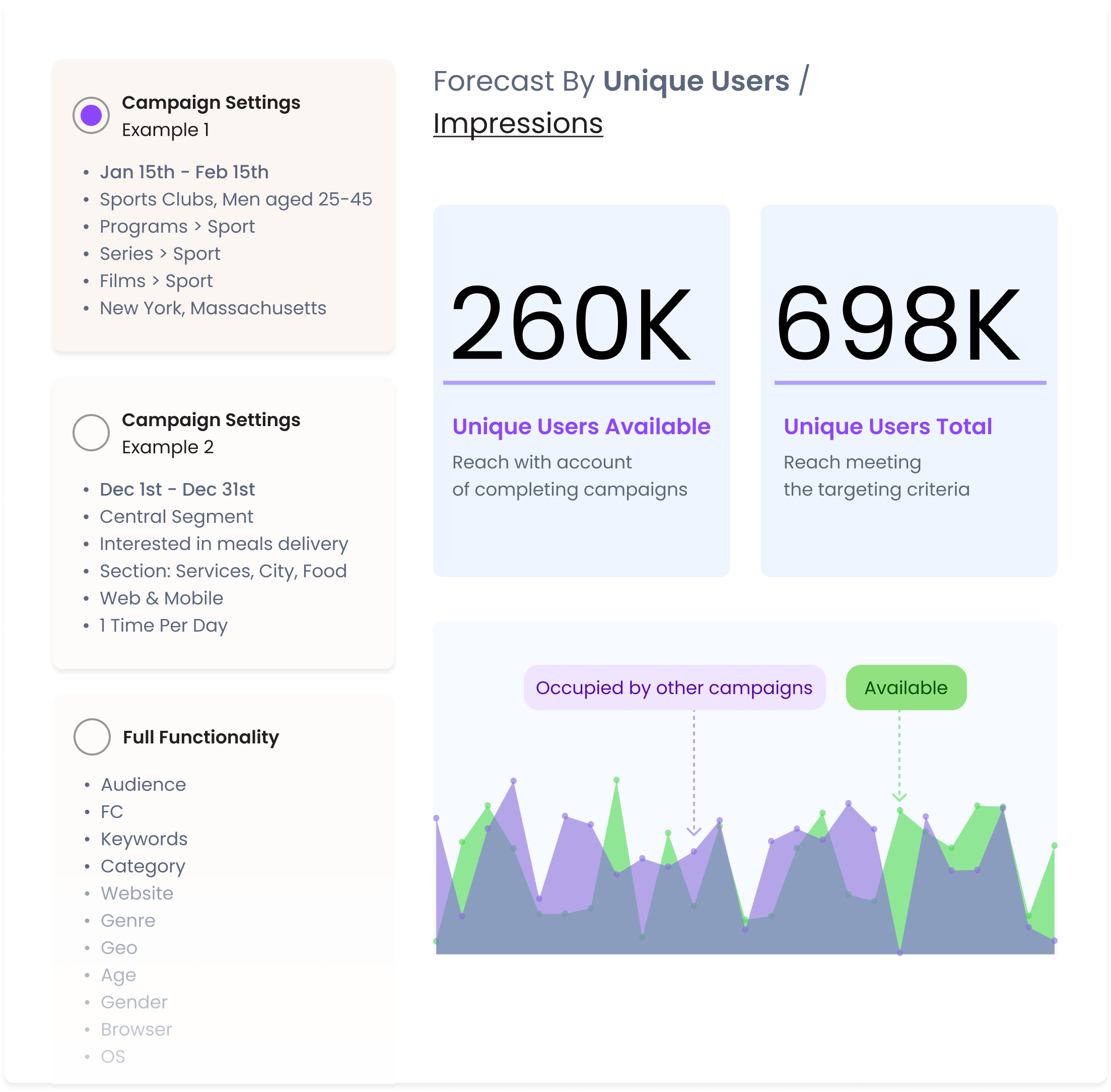
Ad inventory forecasting is the process of predicting how much advertising inventory will be available and when, based on historical ad server data and delivery patterns. It goes beyond simply counting impressions, incorporating trends, seasonality, and real-time changes to help publishers plan inventory, optimize pricing, and improve revenue outcomes.

Why is ad inventory forecasting important?
Ad inventory forecasting is critical for both publishers and advertisers, as it directly impacts revenue, pricing, and campaign planning. For publishers, accurate forecasting helps manage inventory availability, avoid overbooking or under-delivery, and maximize yield. For advertisers, it enables better planning, budget allocation, and campaign execution.
Reliable forecasting reduces delivery risk, improves operational efficiency, and ensures that available inventory is used as effectively as possible.
How is forecasting accuracy measured?
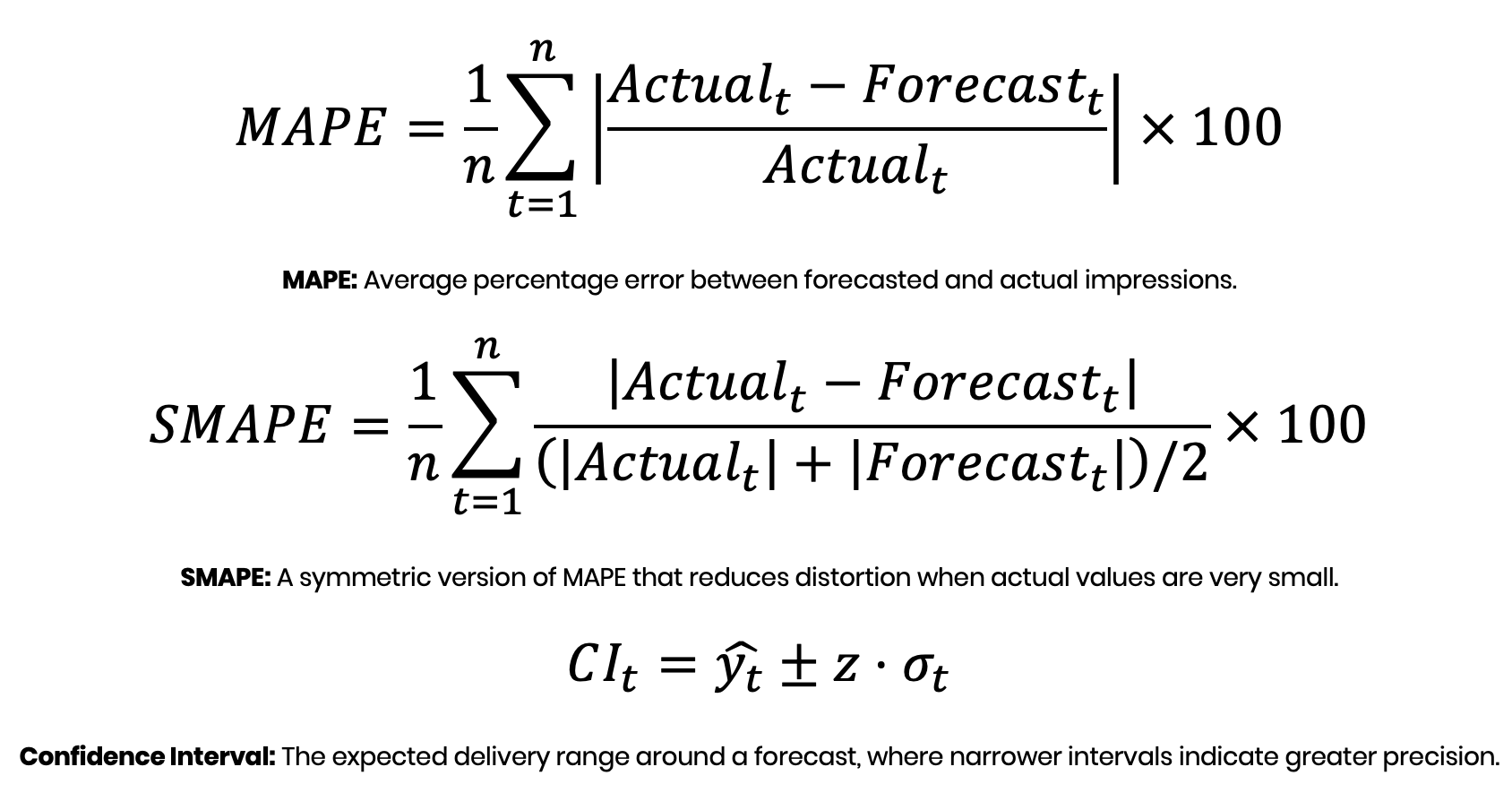
There are different ways to measure ad inventory forecasting accuracy. Burt Forecasting uses a combination of the mean average percentage error (MAPE) and symmetric mean average percentage error (SMAPE). These metrics measure accuracy by calculating the average difference between predicted and actual ad impressions, with lower values indicating higher accuracy. Confidence intervals are also used to estimate the expected range of delivery. Narrower intervals indicate more precise forecasts and help teams understand how closely predictions align with actual performance.
How is forecasting reliability measured?
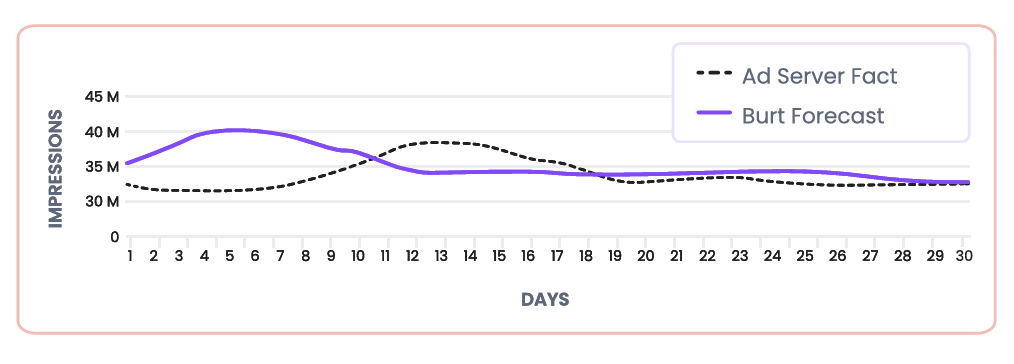
Forecasting reliability measures how consistent forecasts are over time. A forecast can be reliable even if it is not perfectly accurate, as long as the level of error remains stable and predictable.
Reliability is typically evaluated by analyzing forecasting error trends over time using metrics such as MAPE and SMAPE. Confidence intervals also play a role, as smaller and more stable intervals indicate less variability and uncertainty in the forecast.
How can ad inventory forecasting be improved?
Improving forecasting performance requires high-quality, longitudinal, granular data that goes beyond basic historic impressions and requests to include segments, placements, formats, and ad sizes.
Advanced modeling techniques, including machine learning, can help identify patterns and improve accuracy. It is also important to account for external factors such as seasonality, events, and demand fluctuations.
This is where dedicated ad inventory forecasting software becomes essential, turning forecasting from a manual exercise into a repeatable, scalable process that can be continuously refined and improved over time.
What are the challenges and limitations of ad inventory forecasting?
Ad inventory forecasting is inherently complex, and accuracy depends heavily on data quality. Incomplete or inconsistent data can significantly impact forecast performance.
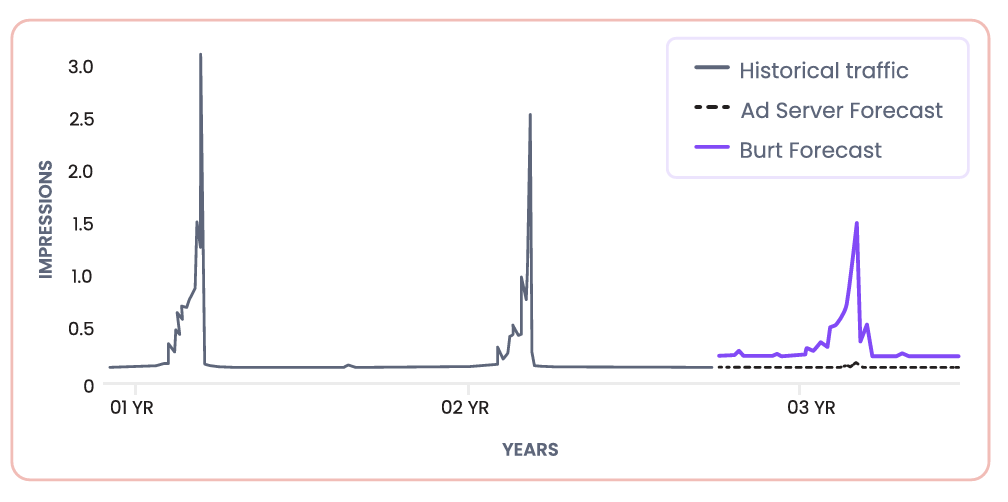
External factors such as market shifts, macroeconomic changes, and global events can disrupt historical patterns. Seasonality can also introduce variability, especially when demand patterns change unexpectedly or when forecasting over longer time horizon.
In addition, real-time changes in campaign demand and sales activity can make it difficult to continuously adjust forecasts. Even with advanced systems, interpretation and decision-making still require human judgment.

Burt’s ad inventory forecasting platform applies these principles using full historical data, seasonality modeling, and automated forecasting workflows to improve accuracy and reliability at scale.
Learn more about Burt Forecasting. Contact Us.