

Programmatic Reporting: A guide.
Programmatic reporting is a critical part of managing advertising revenue across SSPs, ad exchanges, header bidding partners, and other demand sources. While every platform provides its own reporting, understanding performance across the full programmatic stack requires combining and normalizing data from systems that often measure and describe the same activity differently.
What is programmatic advertising reporting?
Programmatic reporting is the process of collecting, normalizing, and analyzing advertising performance data across SSPs, ad exchanges, header bidding partners, ad servers, and other programmatic demand sources.
For publishers, it provides a consolidated view of revenue, impressions, and partner performance. Teams can use that view to investigate changes across the programmatic business and make informed revenue decisions.

Why is cross-SSP programmatic reporting difficult?
Programmatic platforms use different metric definitions, naming conventions, and levels of detail. Differences in gross and net revenue, fees, currencies, time zones, and reporting latency can make apparently similar figures difficult to compare.
The underlying systems change over time. APIs are updated or temporarily broken, schemas change, fields are deprecated, and new dimensions are introduced.
Consistent reporting requires ongoing monitoring and maintenance of integrations and data mappings.
What does a typical programmatic stack include?
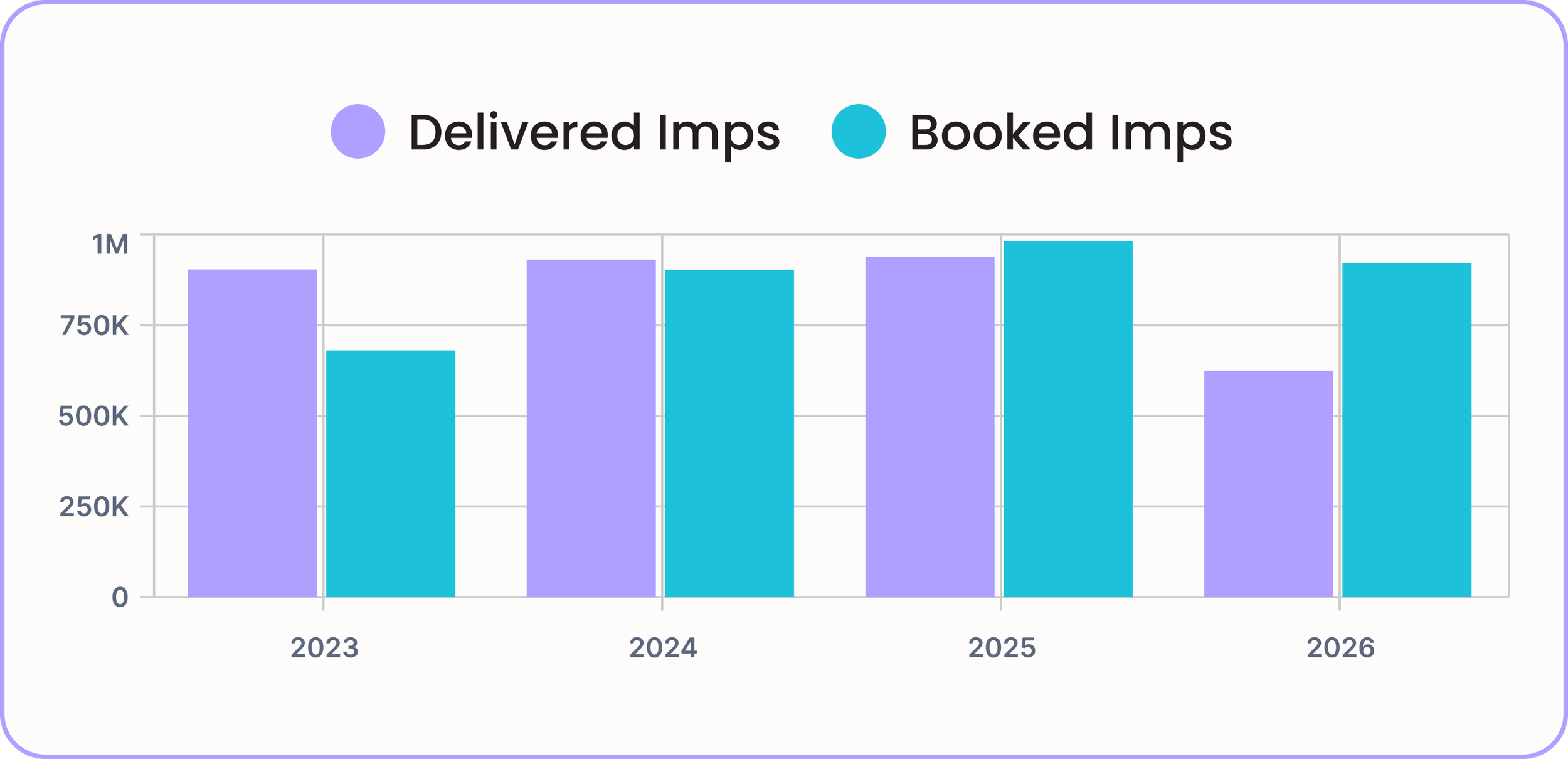
A typical stack includes at least one first-party ad server and multiple demand sources connected through paths such as Prebid, Amazon TAM, and Google Open Bidding. The same partner may participate through more than one path.
Data from these systems is brought into a common reporting model for use in dashboards, scheduled reports, or a publisher’s own data warehouse and business intelligence tools. Traffic, analytics, and verification data can provide additional context.
Which metrics and dimensions matter in programmatic reporting?
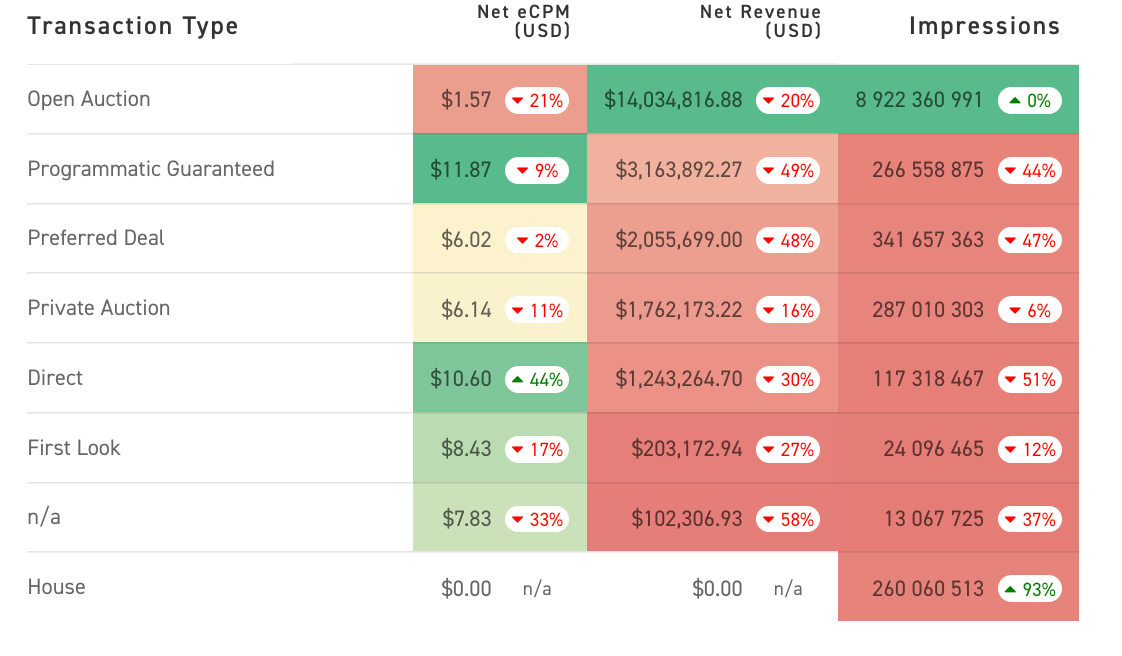
Core metrics include impressions, gross revenue, net revenue, and effective cost per thousand impressions (eCPM). Publishers analyze them by partner, integration type, DSP, advertiser, site, device, country, creative size, placement, deal, and transaction type, depending on what each source provides.
Combining these dimensions helps explain whether a revenue change comes from impression volume, pricing, demand partners, or shifts in inventory mix.
How is programmatic data normalized across partners?
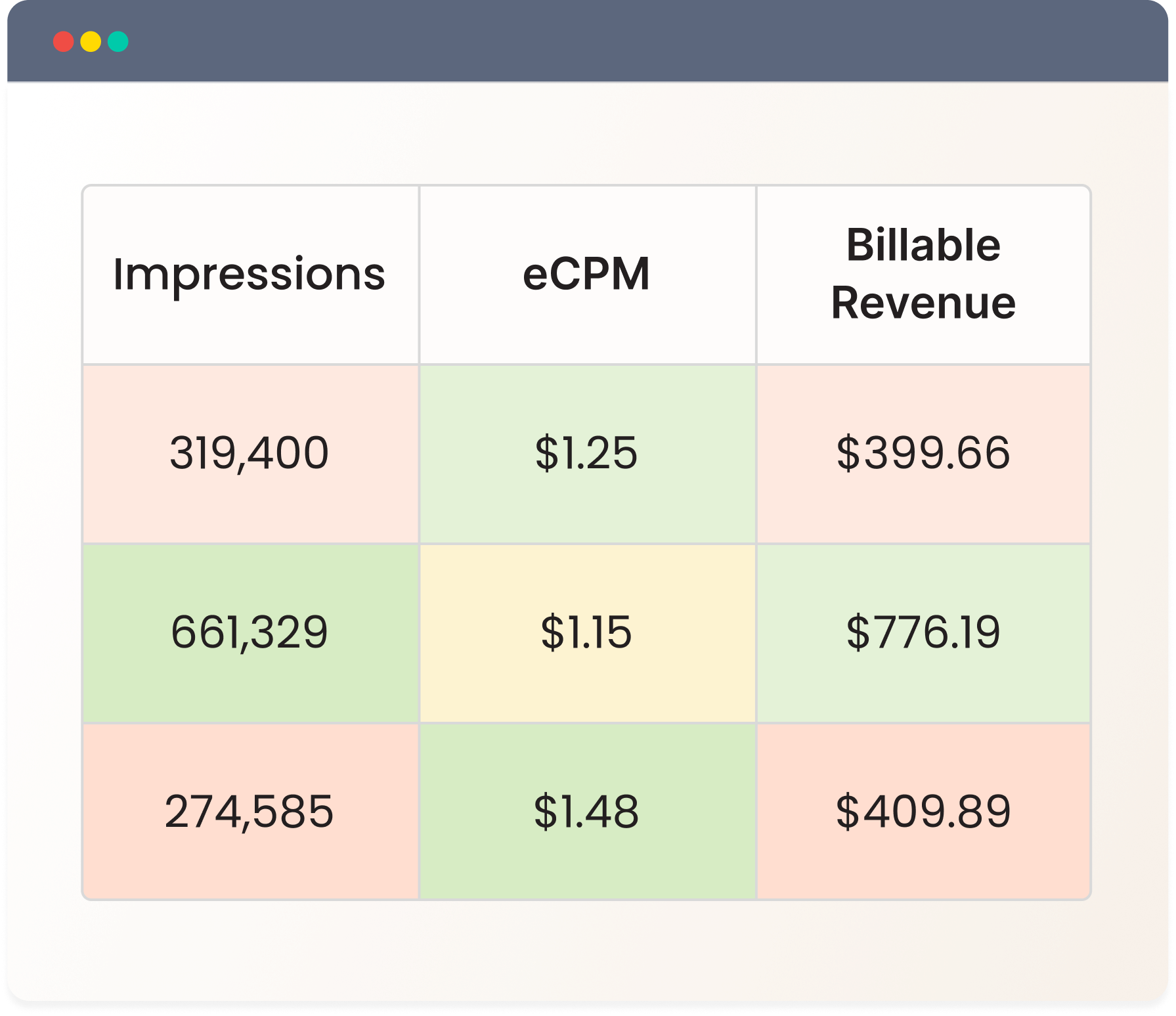
Programmatic data is normalized by mapping source-specific fields and values into common dimensions and metrics, enabling comparisons across partners while preserving traceability to the original data. Consistent reporting also requires clear rules for authoritative sources, gross and net revenue, time zones, late-arriving data, partner fees, and currency conversion.
Advertiser identity is a common challenge. “Kraft Foods,” “Kraft Food,” and “Kraft Foods Inc.” may represent the same company across different platforms. Across thousands of advertisers and many demand partners, maintaining these relationships manually becomes impractical. Burt uses sophisticated entity resolution, drawing on advertiser, brand, and domain data, to bring these identities together at scale.

Burt Programmatic Reporting also standardizes dimensions such as sites, devices, transaction types, and demand sources, and converts revenue into common reporting currencies. Source-level mappings and transformation logic remain visible, so publishers can understand and verify how their data is normalized.
How can programmatic reporting be improved?
A reliable framework has four layers: dependable source integrations, a common data model, explicit normalization and reconciliation rules, and a reporting layer that supports revenue decisions.
Dedicated programmatic reporting software automates data ingestion and normalization, maintains integrations as sources change, and makes the resulting data available for analysis.
This helps teams investigate unusual movements, identify which partners and advertisers are driving results, and spend less time preparing reports.

Burt Programmatic Reporting automates data ingestion and normalization across ad servers, SSPs, header bidding partners, and other programmatic sources, creating a single source of truth for programmatic advertising performance.
Learn more about Burt Programmatic Reporting. Contact Us.